
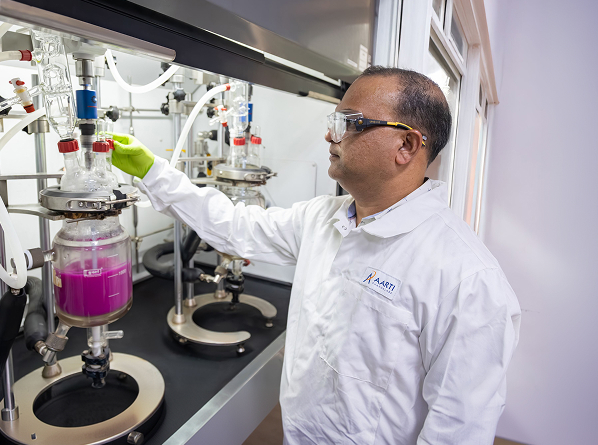
Aarti Pharmalabs Limited (APL) has transformed from a vendor to a preferred partner. Our two cutting-edge R&D facilities, located across Maharashtra and Gujarat, consistently strive for:
 Route Scouting and Design
New Product Development
Process Optimization and Scale-up
Life Cycle Technology Management
Route Scouting and Design
New Product Development
Process Optimization and Scale-up
Life Cycle Technology Management Establishing ourselves as a global pharma API and intermediates manufacturer in the pharmaceutical sector is our strategic objective. In the long haul, we want to further embrace open innovation and build a worthwhile, sustainable nutraceutical companies.
We are prepared to seize development possibilities and play a crucial part in establishing our presence in the international pharmaceuticals sector, supported by our knowledge, experience, technical prowess, and resources organisation.
APL has developed expertise in various chemistries and to name a few:
Lorem ipsum dolor sit amet, consectetur adipisicing elit, sed do eiusmod tempor incididunt ut labore et dolore magna aliqua. Ut enim ad minim veniam, quis nostrud exercitation ullamco laboris nisi ut aliquip ex ea commodo consequat. Duis aute irure dolor in reprehenderit in voluptate velit esse cillum dolore eu fugiat nulla pariatur. Excepteur sint occaecat cupidatat non proident, sunt in culpa qui officia deserunt mollit anim id est laborum.
 Ammonolysis
Condensation
Chlorination
Denitrochlorination
Diazotization
Ethylation
Halex (Fluorination)
Hydrogenation
Nitration
Sulphonation
Alkylation
Acetylation
Amino Acid Esterification
Aldol Condensation
Asymmetric Hydrogenation
Benzidine Rearrangement
Biocatalysis
Bromination/Sandmeyer
Butyl Lithium Reaction
Balz-Schiemann Reaction
Boron Chemistry
Carboxylation
Cynation
Cyclocondensation
Chichibabin Reaction
Chiral Chemistry (Implementation of enzymatic technology)
Dehydrogenation
Denitrochlorination
Diborane Reduction
Darzens Glycidic Ester Condensation
Darzens Glycidic Ester Condensation
Esterification
Epoxidation
Fluorination: KF, AHF, DHF and Balz Schiemann
Friedel Crafts Reaction
Flow reactor technology at commercial scale
Grignard's Reaction
Hydrogenation/Dehalogenation/Reductive amination
Hetero Diels Alder Reaction
Kolbe Schmitt Reaction
Knoevenagel Reaction
Methoxylation
Meerwein-Ponndorf-Verley Reduction
Michael Addition
Negishi Reaction
Oxidation
Oppenauer Oxidation
Organometallic Coupling
Grignard/Kumada/Suzuki
Phosphorylation
Phosgenation
Ring Alkylation and N-alkylation
Sulfonation
Silylation
Sandmeyer Reaction
Suzuki Coupling
Swern Oxidation
Skraup Reaction
Steroid Chemistry
Triphosgene Reactions
Ullmann Reaction
Vapour phase reaction:
Ammoxidation/Isomerisation
Vilsmeier-Haack Reaction
Wittig Reaction
Willgerodt Reaction
Ammonolysis
Condensation
Chlorination
Denitrochlorination
Diazotization
Ethylation
Halex (Fluorination)
Hydrogenation
Nitration
Sulphonation
Alkylation
Acetylation
Amino Acid Esterification
Aldol Condensation
Asymmetric Hydrogenation
Benzidine Rearrangement
Biocatalysis
Bromination/Sandmeyer
Butyl Lithium Reaction
Balz-Schiemann Reaction
Boron Chemistry
Carboxylation
Cynation
Cyclocondensation
Chichibabin Reaction
Chiral Chemistry (Implementation of enzymatic technology)
Dehydrogenation
Denitrochlorination
Diborane Reduction
Darzens Glycidic Ester Condensation
Darzens Glycidic Ester Condensation
Esterification
Epoxidation
Fluorination: KF, AHF, DHF and Balz Schiemann
Friedel Crafts Reaction
Flow reactor technology at commercial scale
Grignard's Reaction
Hydrogenation/Dehalogenation/Reductive amination
Hetero Diels Alder Reaction
Kolbe Schmitt Reaction
Knoevenagel Reaction
Methoxylation
Meerwein-Ponndorf-Verley Reduction
Michael Addition
Negishi Reaction
Oxidation
Oppenauer Oxidation
Organometallic Coupling
Grignard/Kumada/Suzuki
Phosphorylation
Phosgenation
Ring Alkylation and N-alkylation
Sulfonation
Silylation
Sandmeyer Reaction
Suzuki Coupling
Swern Oxidation
Skraup Reaction
Steroid Chemistry
Triphosgene Reactions
Ullmann Reaction
Vapour phase reaction:
Ammoxidation/Isomerisation
Vilsmeier-Haack Reaction
Wittig Reaction
Willgerodt Reaction
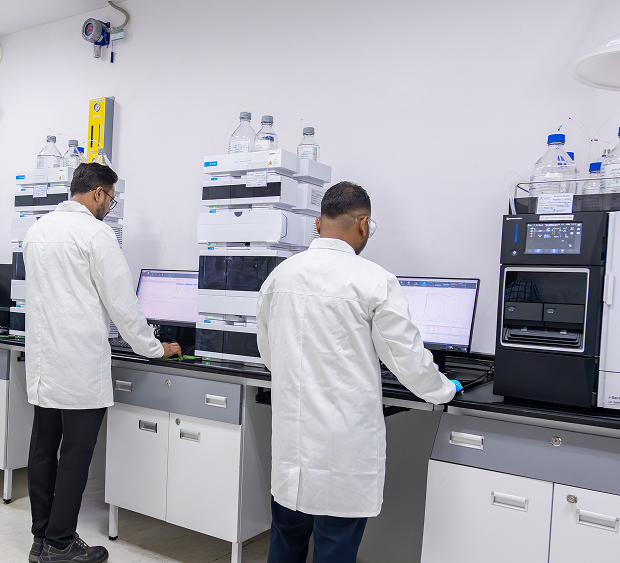
APL has a state-of-the-art analytical laboratory with an experienced and qualified team of scientists engaged in
Typical infrastructure at the Analytical Development laboratory consists of specialised equipment such as HPLC, GC, LCMS, GCMS, Flash-Chromatography, ICP-MS, Particle Size Analyser, NMR and other equipment such as colourimetry, auto-titrator, stability chamber etc.
 State of the art synthesis and process development laboratories
With more than 20 PhDs and 80 postgraduate scientists
State of the art synthesis and process development laboratories
With more than 20 PhDs and 80 postgraduate scientists
Reaction workstations are established to conduct various unit reactions
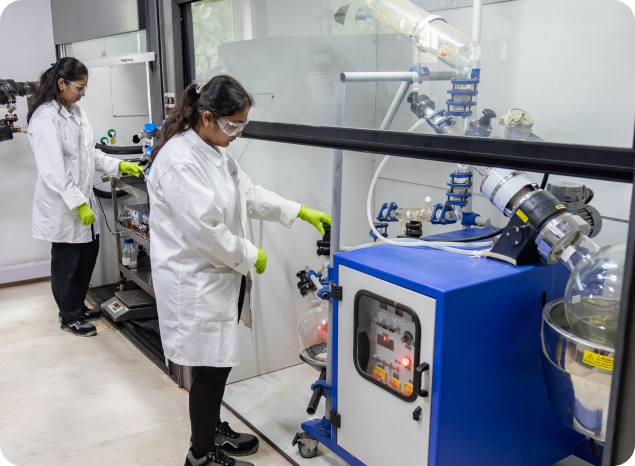
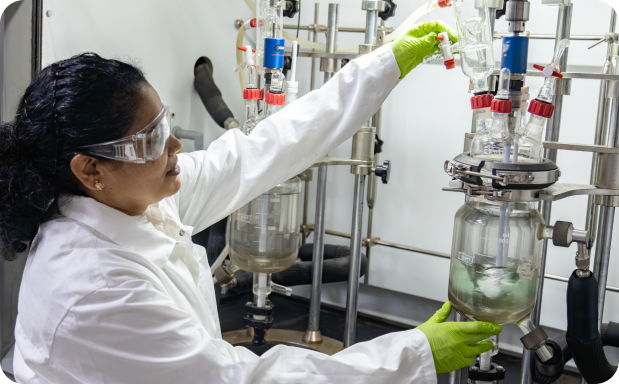
Our labs are equipped with modern experimental set-ups to conduct a range of atmospheric pressure reactions. Fully automated advanced jacketed glass reactor set-ups help in easy control of parameters such as temperature, dosing, pH control dosing while capturing real-time data. We also conduct cryogenic (-80oC) and high temperature (>150oC) reactions regularly using this cutting-edge set-up.
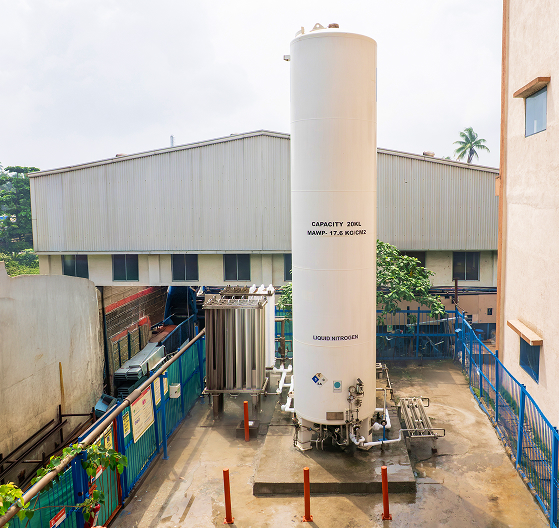
A dedicated fully automated high-pressure section has been developed with ballast-proof walls. The reactors are remotely controlled by PLC to avoid any exposure to research personnel and meet the best safety standards. Further, software can control gas feeding, temperature control, cooling, liquid feeding, etc., while capturing real-time data. Reactors with various MOCs like SS316, Hastelloy C22, Zirconium, Tantalum, etc. are part of the facility.
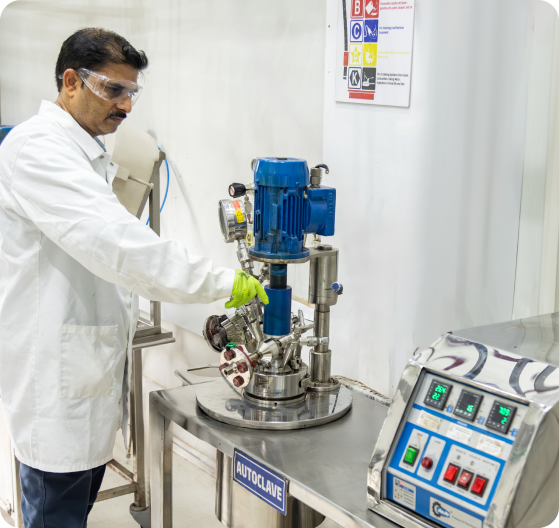
Parallel reactors are being used for high throughput screening of reaction parameters and process optimization using statistical design of experiments (DOE) software. Parallel reactors are also used for deviation/What-if studies during process development to optimise development and optimisation time.
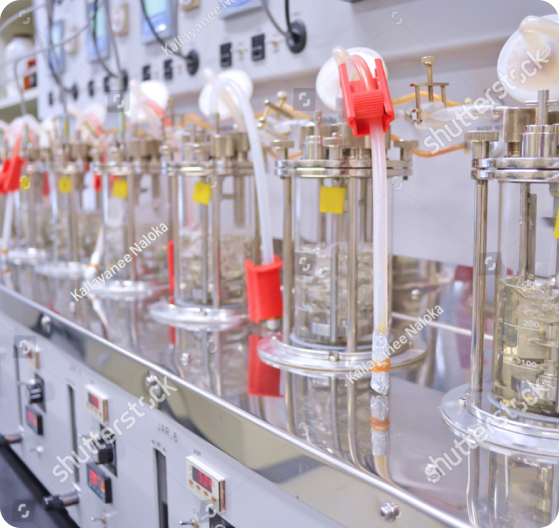
React-IR: Understanding Reaction Kinetics
FBMR: Monitor and Control the particle size
Colorimetric probe: Understanding heat of the reaction
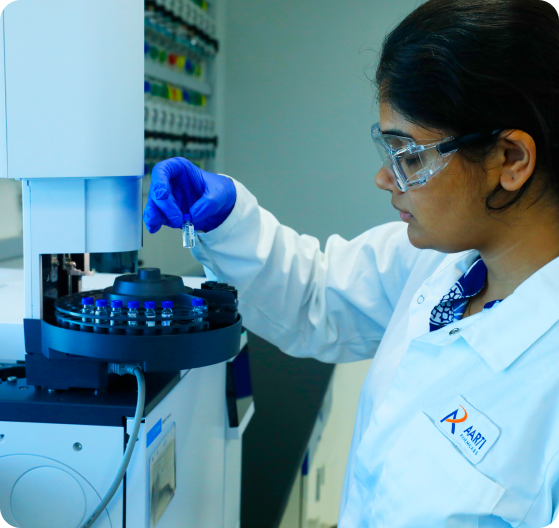
Jacketed Agitated Nutsche Filter, Centrifuge filter, solvent recovery unit
Additionally, our facility is equipped with an automated distillation apparatus that can achieve separation of compounds with boiling point difference in the range of 1oC. This distillation set-up provides flexibility for changing theoretical plates and reflux ratio. The data obtained from the lab helps while scaling up and designing pilot and plant scale distillation set-up. The distillation set-ups are available in different MOCS: Glass, SS316, etc. to ensure different chemistries can be accommodated.
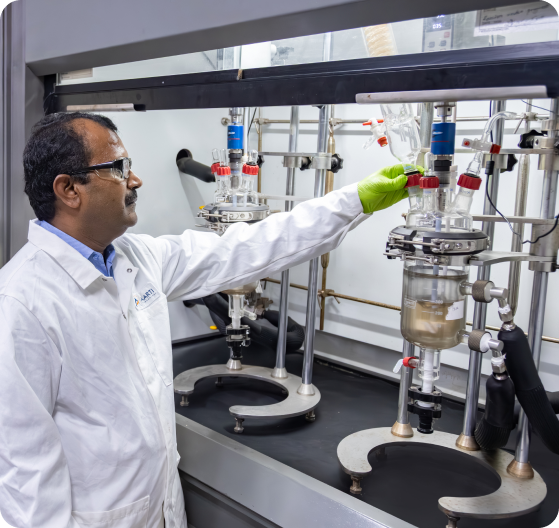
Our labs are equipped with modern experimental set-ups to conduct a range of atmospheric pressure reactions. Fully automated advanced jacketed glass reactor set-ups help in easy control of parameters such as temperature, dosing, pH control dosing while capturing real-time data. We also conduct cryogenic (-80oC) and high temperature (>150oC) reactions regularly using this cutting-edge set-up.
A dedicated fully automated high-pressure section has been developed with ballast-proof walls. The reactors are remotely controlled by PLC to avoid any exposure to research personnel and meet the best safety standards. Further, software can control gas feeding, temperature control, cooling, liquid feeding, etc., while capturing real-time data. Reactors with various MOCs like SS316, Hastelloy C22, Zirconium, Tantalum, etc. are part of the facility.
Parallel reactors are being used for high throughput screening of reaction parameters and process optimization using statistical design of experiments (DOE) software. Parallel reactors are also used for deviation/What-if studies during process development to optimise development and optimisation time.
React-IR: Understanding Reaction Kinetics
FBMR: Monitor and Control the particle size
Colorimetric probe: Understanding heat of the reaction
Jacketed Agitated Nutsche Filter, Centrifuge filter, solvent recovery unit
Additionally, our facility is equipped with an automated distillation apparatus that can achieve separation of compounds with boiling point difference in the range of 1oC. This distillation set-up provides flexibility for changing theoretical plates and reflux ratio. The data obtained from the lab helps while scaling up and designing pilot and plant scale distillation set-up. The distillation set-ups are available in different MOCS: Glass, SS316, etc. to ensure different chemistries can be accommodated.
Based on the business requirement, a dedicated team of scientists develops
certain strategic chemistries contributing towards multiple growth projects.
Following strategic chemistries are being developed
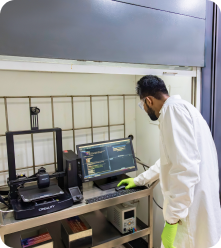
Our laboratories are equipped to perform the following reactions in continuous mode
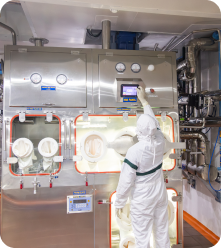
Our sophisticated photo-reactors are used to develop photochemistry-related products in a short time.
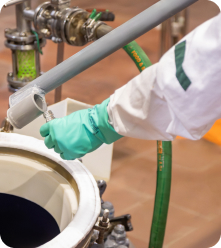
Our ultra-modern fixed-bed reactors are used to develop various vapour-phase chemistries such as ammoxidation reaction, vapour-phase isomerisation and vapour-phase alkylation to name a few.


There are essentially four major hazards in chemical processing:
Health and environmental hazards are identified through the in-house SDS generated through GHS compliant software.
The chemical reaction hazards that may be generated during the chemical processing/storage. The three major chemical reaction hazards are:
A dedicated team equipped with advanced laboratory equipment conducts different process safety studies.
We carry out thermal stability tests and other fire and explosion tests especially for powder safety testing. For quick results of powder safety testing, we have also extensive tie ups with third-party service providers. The data from these tests is assessed in-house in our laboratories.
We are also building capabilities and infrastructure for fire and explosion hazards such as
We undertake Hazop studies during the R&D process development to ensure our processes are inherently safe for commercialization
We have developed a Safety Data Sheet (SDS) database of all the GHS compliant products and chemicals being used at APL. This online database is readily accessible to all employees. We also have in-house capabilities to retrieve and generate new MSDS for development products. Being a ‘Responsible Care’ company, such capability of material safety management also helps in establishing product stewardship for existing and new products which helps our employees and customers to take appropriate action and care while handling our chemicals and products.
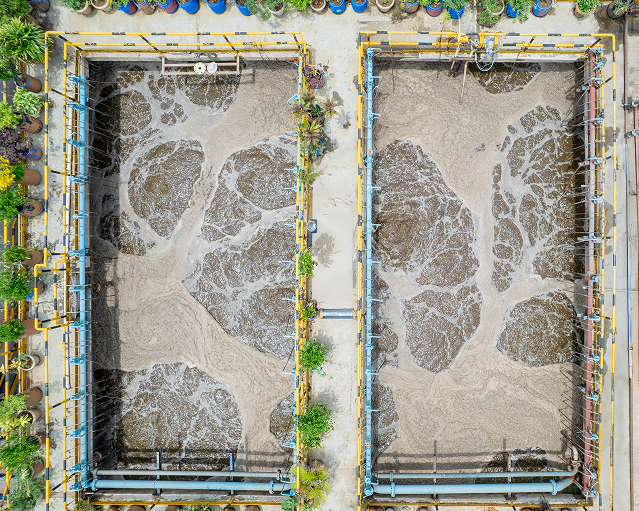
Our waste pre-treatment studies aim to reduce the environmental load at process design stage while targeting various environmentally important parameters such as:
COD
BOD
TSS
pH
TDS
Ammoniacal Nitrogen content
Bromide content
Chloride content
Sulphate content
Metal content

APL’s Intellectual Property (IP) framework comprises stringent terms for access control, information sharing and authorised disclosure. It is designed to ensure complete confidentiality of its processes and knowledge while meeting ISO 27001:2013 requirements.
The Knowledge Management team is equipped with databases and skills to effectively undertake chemical searches in the perspective of Freedom-to-Operate/Non-Infringed Process development.
This team also ensures efficient implementation and monitoring of ISO 27001:2013 (Integrity, Confidentiality and Availability) accreditation requirements.
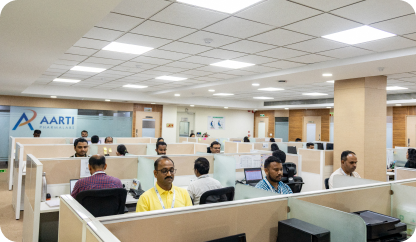
At APL, we initiate every project in R&D through a programme management system to enable an efficient flow from new enquiry to commercialisation. It enables the deployment of suitable resources for various activities, ensuring a methodical execution and its evaluation. Unexpected contingencies are provisioned for, while any deviations are anticipated and mitigated on time. The process also helps us to generate and communicate the expected timelines of the project to the stakeholders effectively.